
Refsum syndrome
Refsum syndrome is an inherited metabolic condition, associated with elevated phytanic acid plasma levels, which impacts many body systems.
Search results
Refsum syndrome is an inherited metabolic condition, associated with elevated phytanic acid plasma levels, which impacts many body systems.
Retinitis pigmentosa (RP) is an inherited eye condition that affects the photoreceptor cells responsible for capturing images from the visual field.
Usher syndrome is an inherited condition that affects both hearing and vision.

Do you want to win up to £25,000 and feel good about supporting people with inherited progressive sight loss?! 50+ Retina UK supporters have won a cash prize so far.
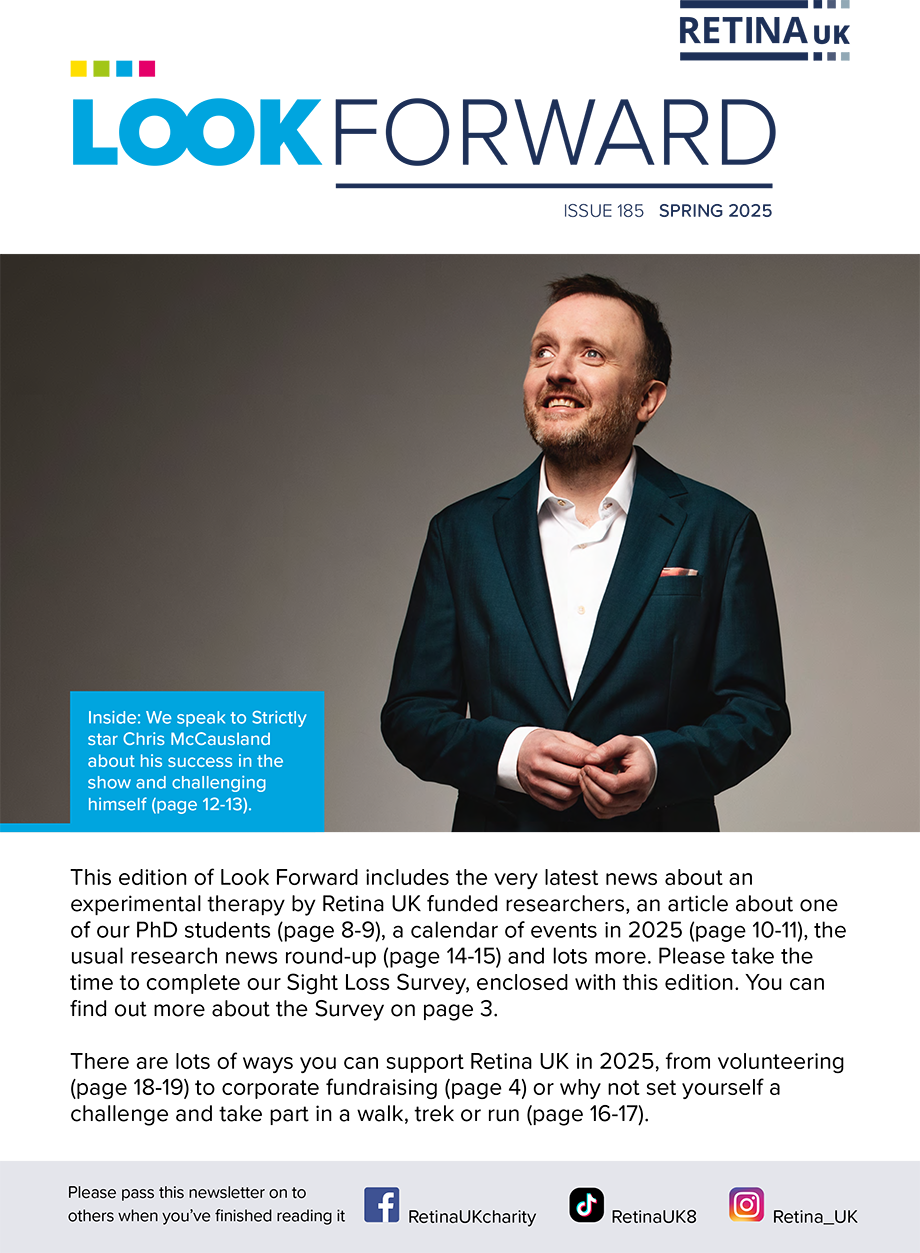
This edition of Look Forward includes the very latest news about an experimental therapy by Retina UK funded researchers, an article about one of our PhD students, a calendar of events in 2025, the usual research news round-up and lots more. Please take the time to complete our Sight Loss Survey, enclosed with this edition. You can find out more about the Survey.
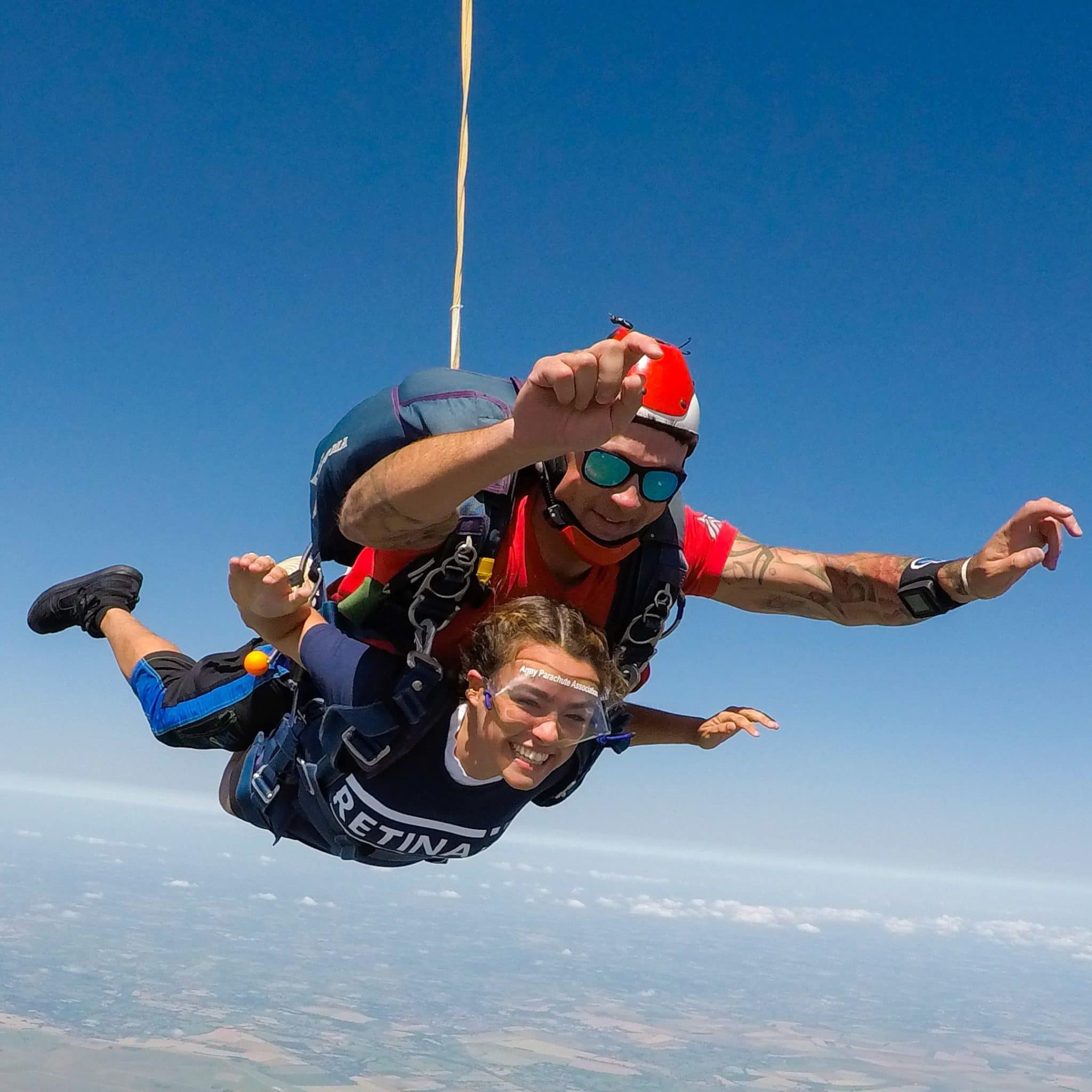
During our 50th anniversary year, take to the skies with an epic spring skydive for Retina UK!
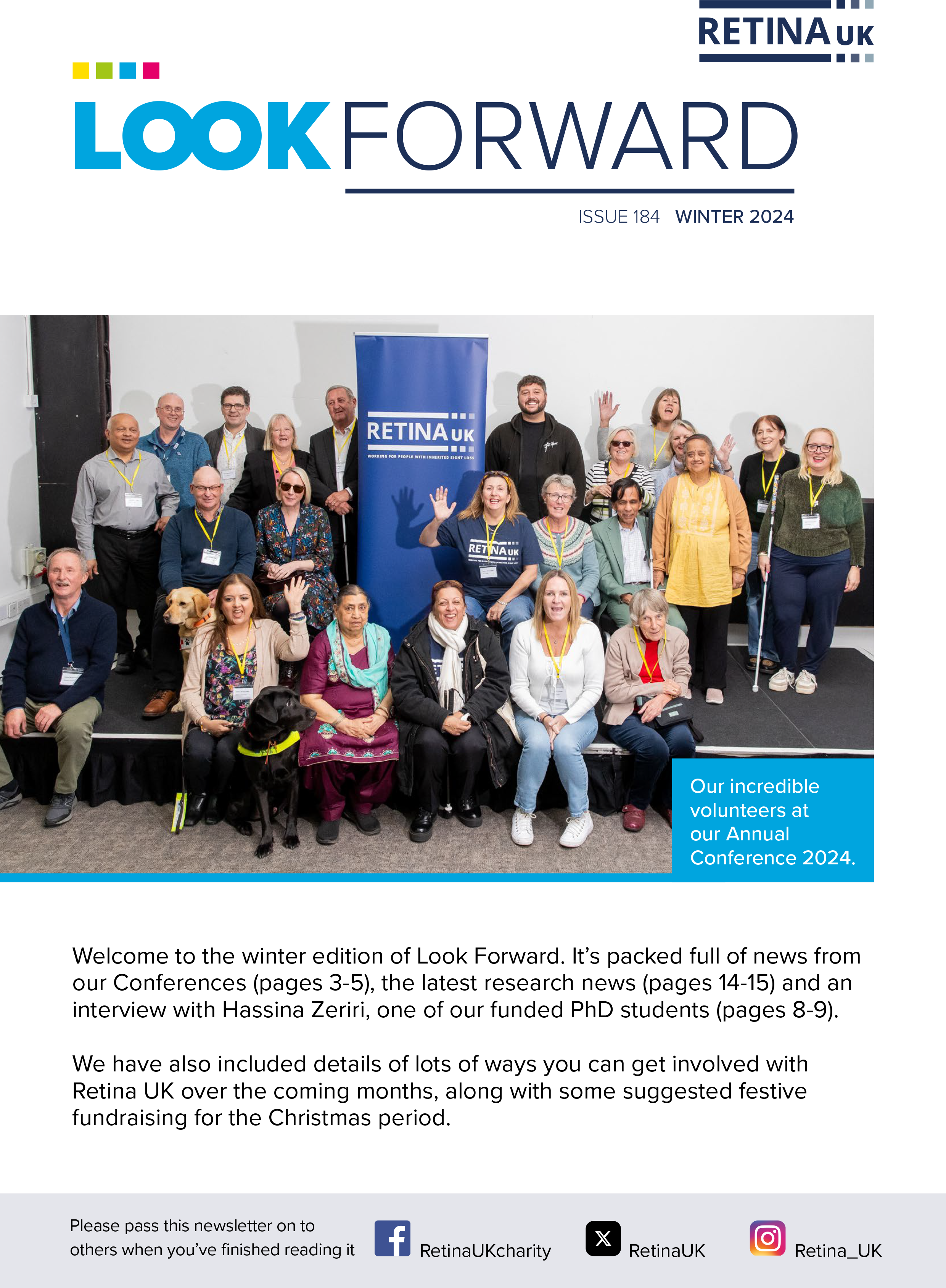
Welcome to the winter edition of Look Forward. It’s packed full of news from our Conferences, the latest research news and an interview with Hassina Zeriri, one of our funded PhD students.
We have also included details of lots of ways you can get involved with Retina UK over the coming months, along with some suggested festive fundraising for the Christmas period.
Face your fears and support Retina UK with a charity skydive this summer!
Are you ready to sign up for a spooky skydive and face your fears for Retina UK?

With your challenge, you’ll help support people affected by inherited sight loss to lead better lives today and accelerate the search for treatments for the future.