
Webinar: Usher syndrome mini series – part one
This webinar covers key questions and topic areas including what Usher syndrome is, how to get a diagnosis, both clinical and genetic, and what will happen after this.
Search results
This webinar covers key questions and topic areas including what Usher syndrome is, how to get a diagnosis, both clinical and genetic, and what will happen after this.

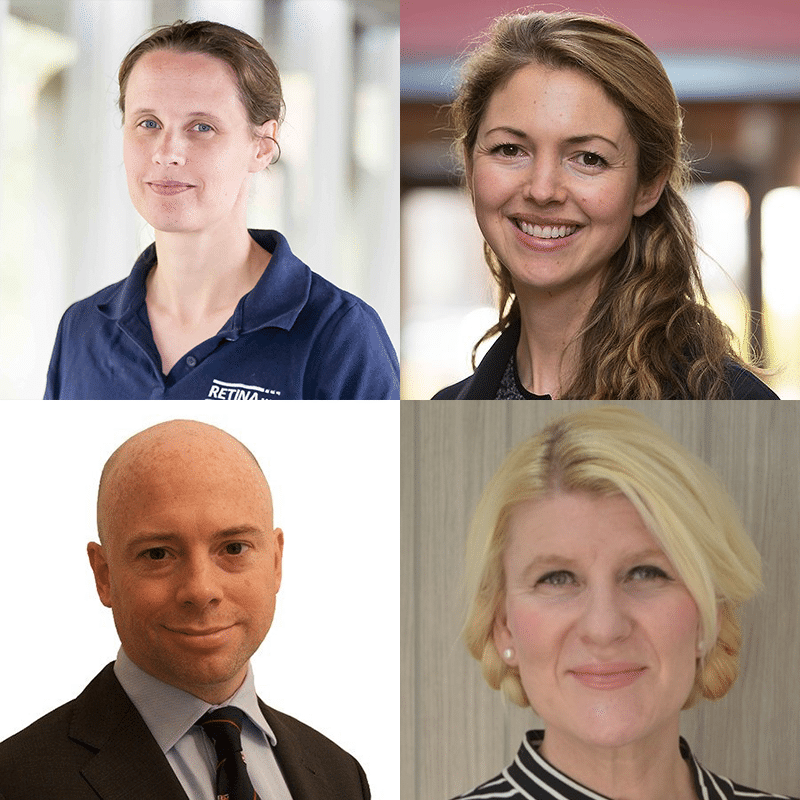
Our first Expert is Simon Keightley, a consultant ophthalmic surgeon and Director of Examinations for the International Council of Opthalmology. With more than 35 years in the field, Simon is ready and waiting for your questions.
Luxturna, a gene therapy, is only for the treatment of Leber congenital amaurosis type 2 (LCA2) and severe early-onset RP caused by mutations in a specific gene called RPE65.

Lynda Cantor was a founder member of the charity in 1975 and one of our original trustees
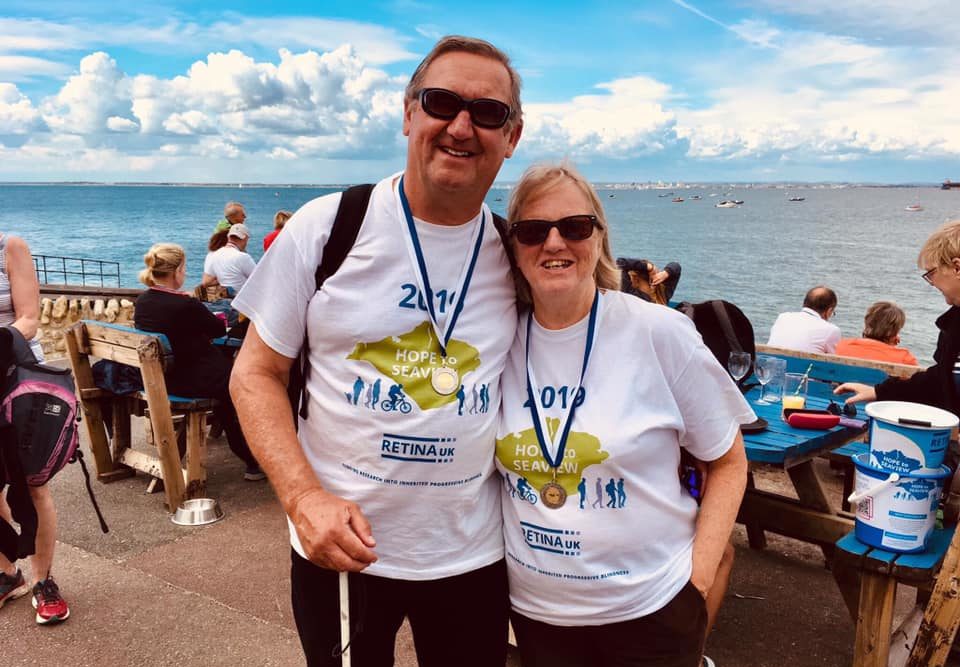
In 2023, the annual Isle of Wight walk in support of Retina UK will return. Starting at Ryde Pier, walkers will follow a five mile scenic walk with spectacular views.
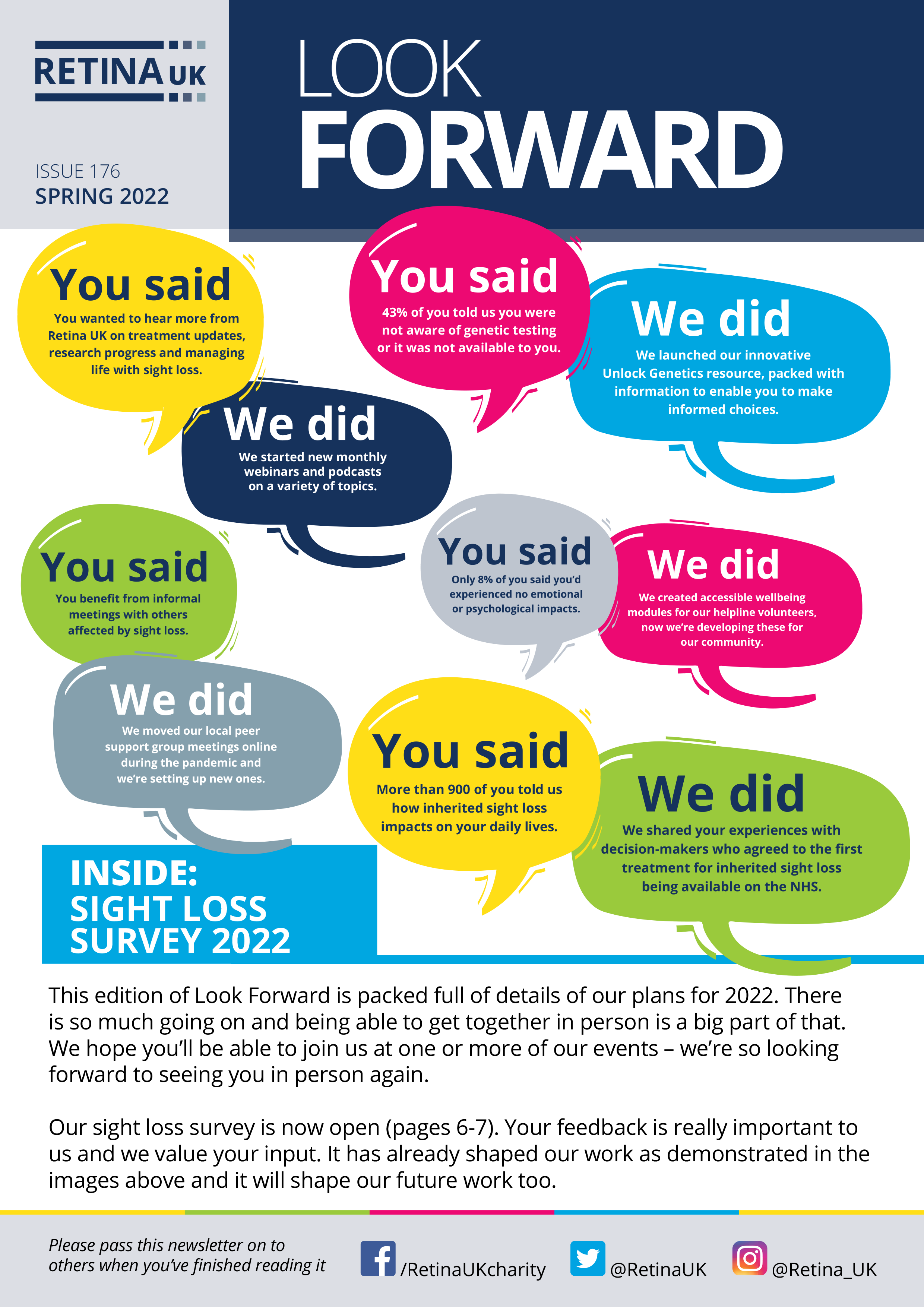
This edition of Look Forward is packed full of details of our plans for 2022. There is so much going on and being able to get together in person is a big part of that.
Our monthly e-Newsletter featuring the latest updates from Retina UK. Subscribe now to receive these updates directly to your email.
Our monthly e-Newsletter featuring the latest updates from Retina UK. Subscribe now to receive these updates directly to your email.
Our monthly e-Newsletter featuring the latest updates from Retina UK. Subscribe now to receive these updates directly to your email.

The Great North Run is the largest half marathon in the world, taking place annually in North East England.