
Autoimmune Retinopathy
Autoimmune diseases are quite distinct from inherited retinal dystrophies.
Search results
Autoimmune diseases are quite distinct from inherited retinal dystrophies.
Autosomal recessive inheritance means that the faulty gene is on an autosome (any chromosome other than the sex chromosomes) and that both copies need to be faulty to cause sight loss
Information for healthcare professionals: Genetic testing and counselling in inherited retinal disease
As a coalition of sight loss charities, we are calling on the Government to make the benefit system and employment support fit for purpose for blind and partially sighted people.

Whether you're an expert runner, or a rebel *with* a cause, there's no better experience than the London Marathon!

Inside this edition, register now for our AI webinar on 7 December with Dr Nikolas Pontikos.
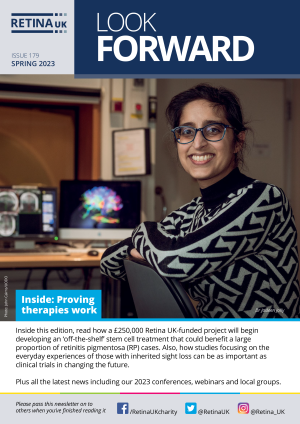
The Spring 2023 edition of the Retina UK newsletter, Look Forward, which includes articles about our upcoming events, research updates and more.

Angus was part of #TeamRetinaUK in 2021 and is running again in 2024. In the run-up to the 2021 race, this is what he had to say:

Faye was part of #TeamRetinaUK in 2019. This is what she had to say in the run up to the race:
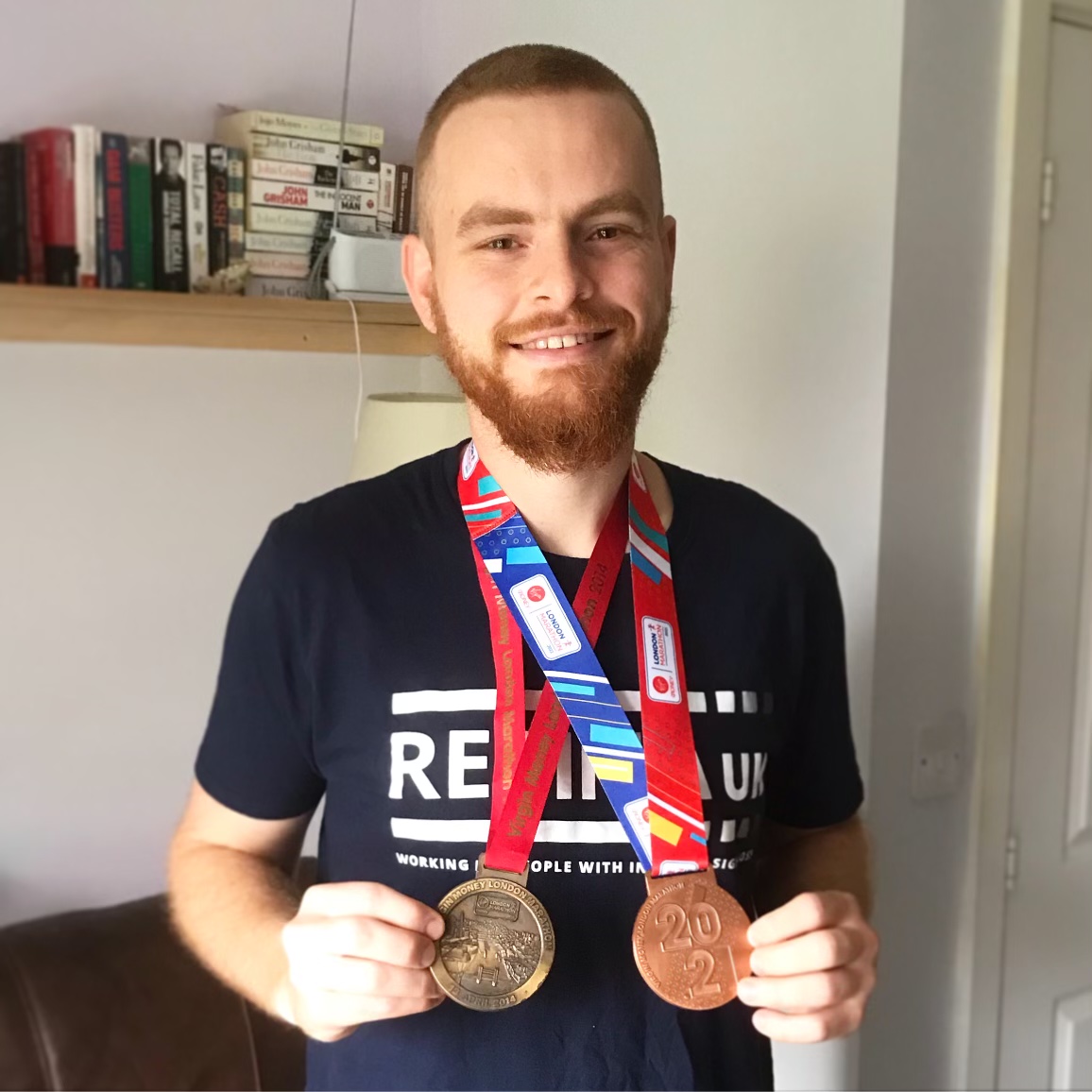
Fundraising for Retina UK means a lot to me - both my dad and my nephew have been affected by inherited sight-loss, and I've seen first-hand the incredible work this charity does.