
Search
Search results
Funding paves the way for achromatopsia
A research project funded by Retina UK helped pave the way to a new gene therapy that has recently produced encouraging results in two young people with achromatopsia, a condition that causes complete colour-blindness and poor overall vision from birth.
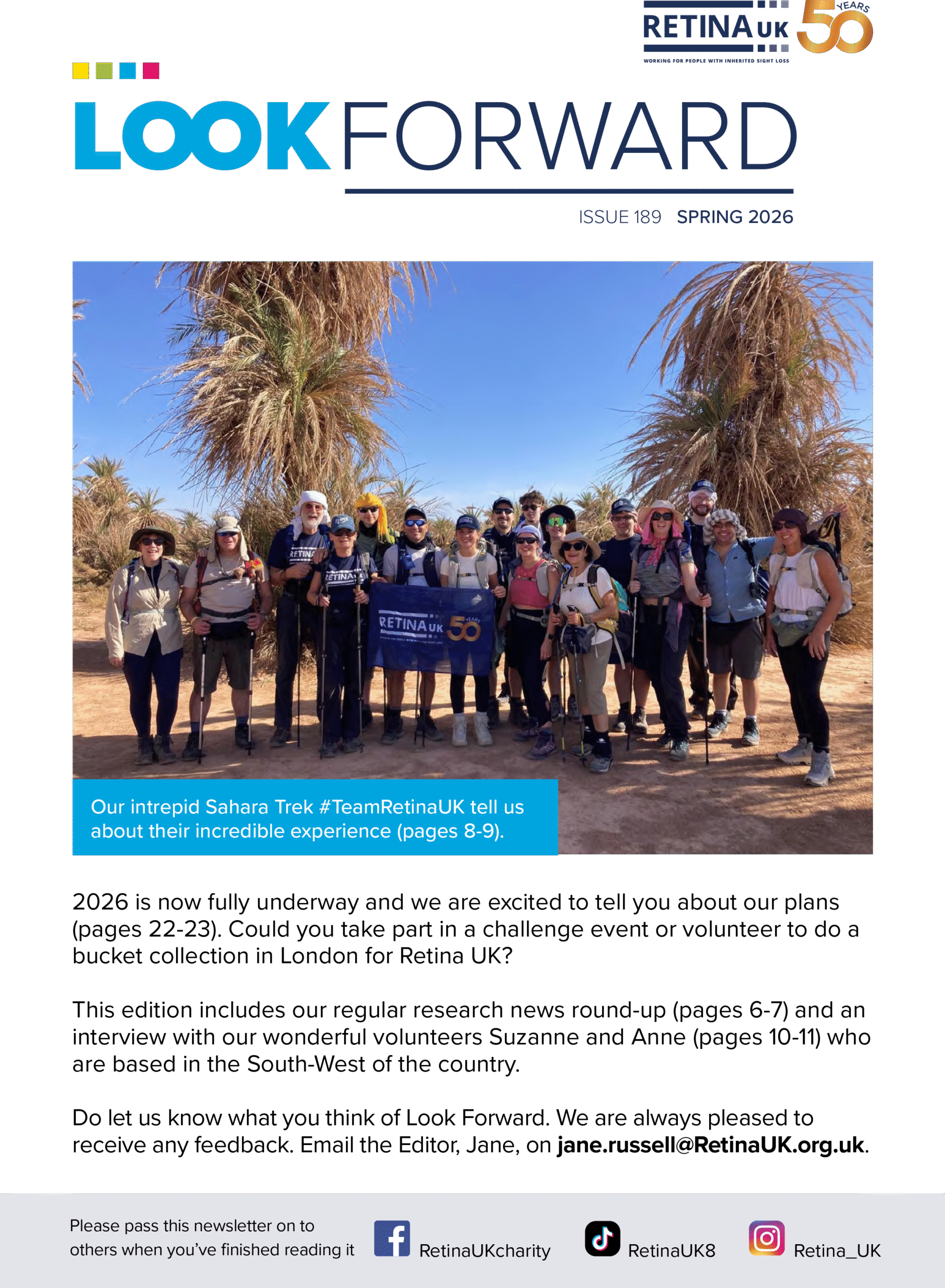
Look Forward – Spring 2026 – Issue 189
Inside: Our intrepid Sahara Trek #TeamRetinaUK tell us about their incredible experience. 2026 is now fully underway and we are excited to tell you about our plans. Could you take part in a challenge event or volunteer to do a bucket collection in London for Retina UK?
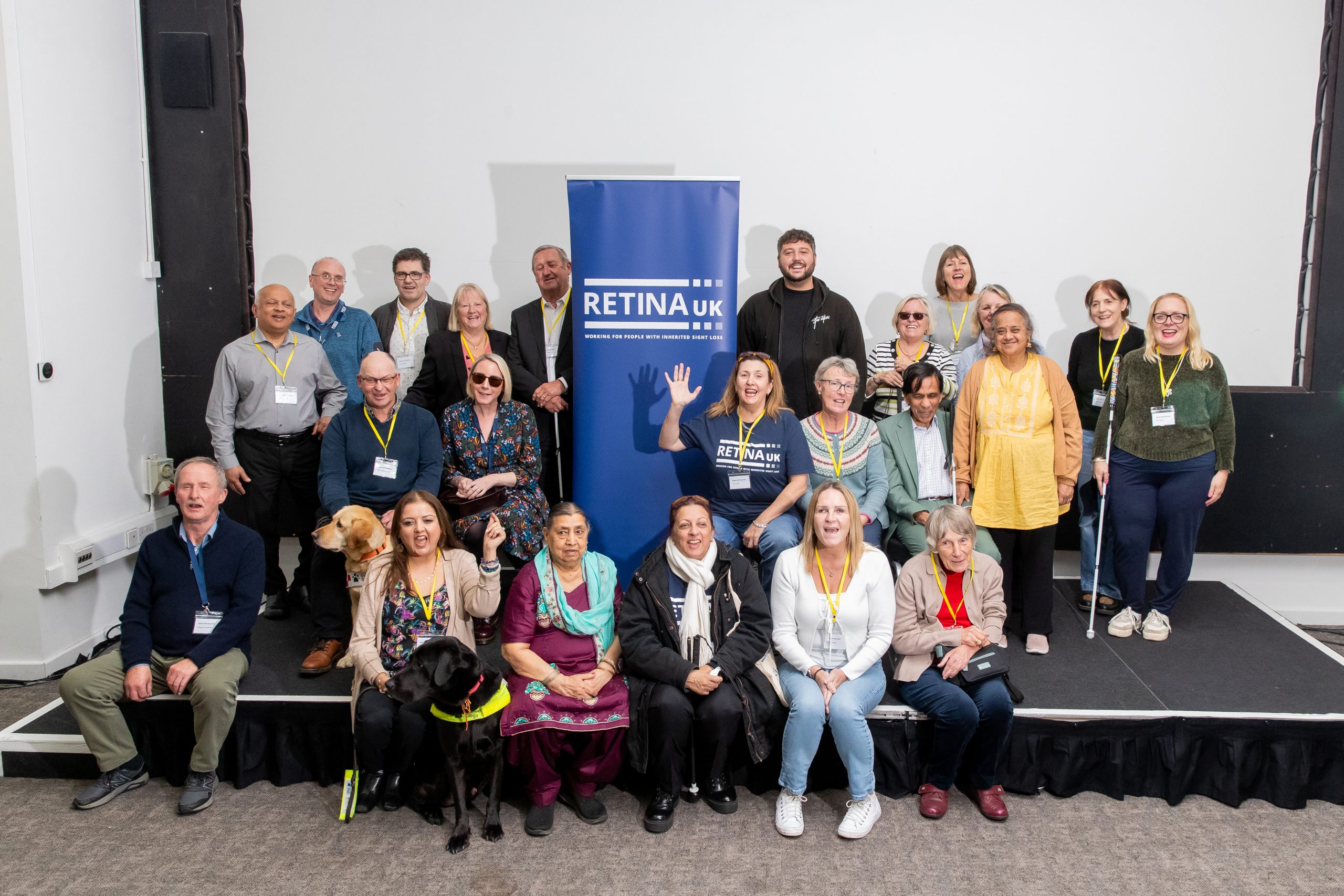
Corporate partnerships
Our partnerships are mutually beneficial. For Retina UK this means we can fund more research and offer support on a local level, while our partners can achieve corporate social responsibility objectives whilst making a tangible impact.
#TopTechTuesday
The latest developments in technology.

Information for employers
If you are considering employing someone with inherited sight loss, or have an employee recently been diagnosed with the condition, you will need to take steps to ensure that you treat them fairly and that they can work safely and effectively.
Drugs for cancer and alcoholism show promise for RP
With all the interest in exciting gene and cell therapies for inherited sight loss, it’s easy to forget that more traditional drugs can also hold promise.

West Midlands Local Peer Support Group
Tuesday 27 October, 7.00pm - 8.00pm - via Zoom - Please come and join facilitator Perm and the group for their latest online catch up where we are delighted to welcome our inspirational guest speaker Shazia Begum.
First-in-human trial launches for Familial Drusen cell therapy
Sanaregen Vision Therapeutics has received FDA clearance to begin a first-in-human clinical trial of SVT-001, an investigational cell therapy for Familial Drusen, a rare inherited retinal disease that currently has no approved treatment.
New discovery could help overcome a key challenge in gene editing approaches
Researchers at the University of Wisconsin-Madison have identified a potential way to make CRISPR gene editing more efficient in retinal cells, which could eventually help to develop treatments for inherited retinal dystrophies (IRDs).