
The Gene Team
Funding from Retina UK has allowed to team to explore the viability of gene therapy as a treatment for RP and related conditions, and build a pipeline of clinical trials.
Search results
Funding from Retina UK has allowed to team to explore the viability of gene therapy as a treatment for RP and related conditions, and build a pipeline of clinical trials.
Our Keynote speaker will be Mr Kanmin Xue. Mr Xue is a Consultant Vitreo-retinal Surgeon at the John Radcliffe Hospital and Wellcome Trust clinician scientist fellow at the University of Oxford where he leads the Retinal Disease and Repair Group.

Saturday 22 August 2026, 1.00pm - 7.00pm - In-person - Come and join Colin and the group at the Tyneside Irish Centre for their latest in-person event in Newcastle.

This edition marks the start of the charity's 50th anniversary year. It includes lots of ways to get involved over the next 12 months along with details of our Annual and Professionals' Conferences in September.

Tuesday 22 September 2026, 7.00pm - 8.00pm - via Zoom - Please come and join facilitator Suzanne and the group for their latest online catch up where we are pleased to welcome our guest speaker Tricia Sail, winner of BBC's Race Across the World 2023.

Thursday 15 October 2026, 7.00pm - 8.30pm - via Zoom - Come and join Mark Baxter and the group for our latest Men's Peer Support Group online social catch up.
Ocugen have recently announced that they have completed enrolment and dosing in their pivotal phase 2/3 trial of OCU410ST ahead of schedule.

Inside this edition, register now for our AI webinar on 7 December with Dr Nikolas Pontikos.
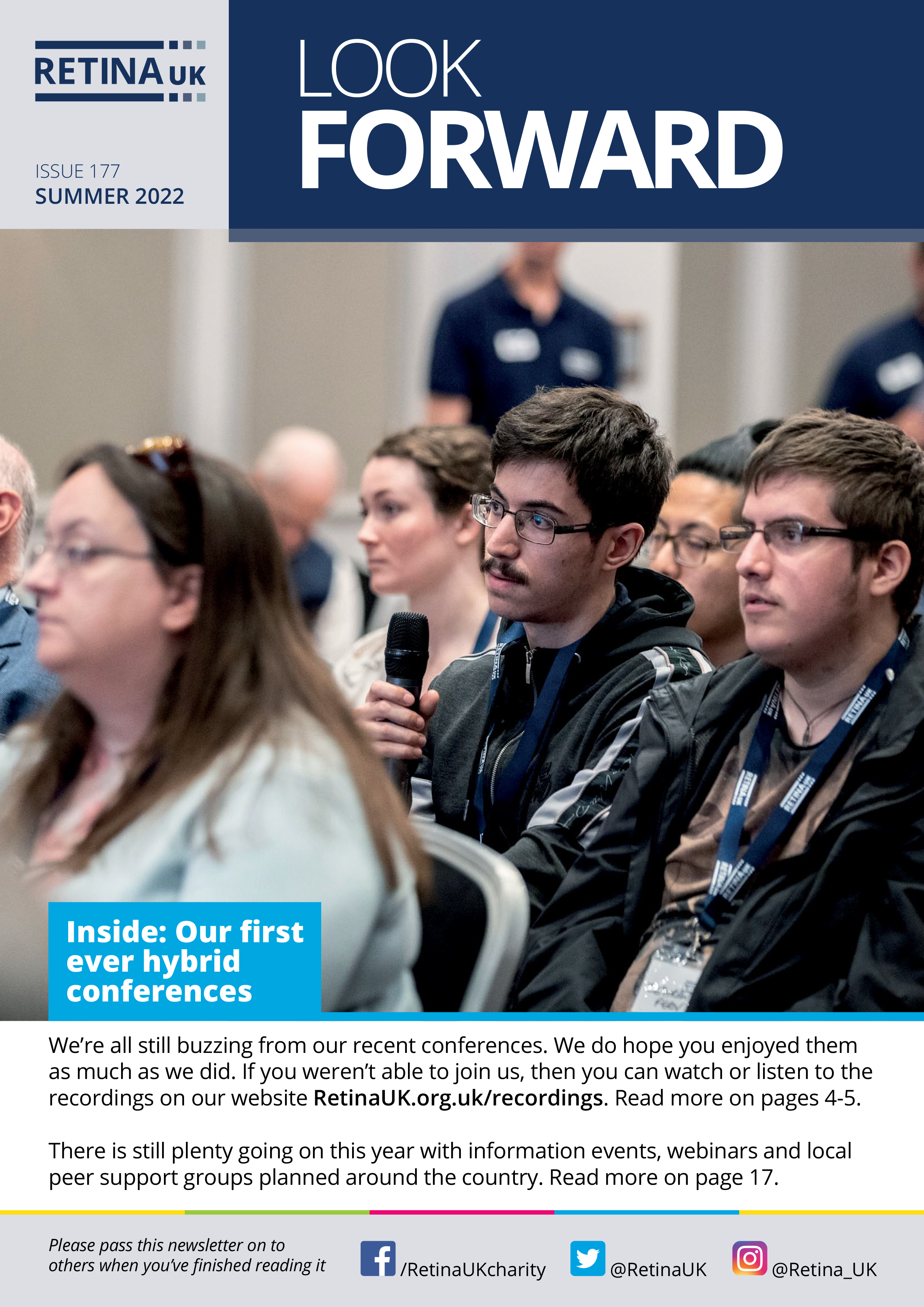
We’re all still buzzing from our recent conferences. We do hope you enjoyed them as much as we did. If you weren’t able to join us, then you can watch or listen to the recordings on our website.

Friday 4 December 2026, 6.30pm - 9.30pm - In-person - Please come and join facilitator Bhavini and the group for their Christmas event and evening out to see ABBA Voyage at the ABBA Arena in London's Queen Elizabeth Olympic Park .