Encouraging results from ProQR USH2A clinical trial
Biotechnology company ProQR has announced encouraging results from its phase 1/2 clinical trial of an innovative treatment for sight loss caused by faults in a specific section of the USH2A gene.
Search results
Biotechnology company ProQR has announced encouraging results from its phase 1/2 clinical trial of an innovative treatment for sight loss caused by faults in a specific section of the USH2A gene.
Retina UK is delighted that the Scottish Medicines Consortium (SMC) has accepted the gene therapy Luxturna (voretigene neparvovec) for ongoing use by the NHS in Scotland.
Stem cells are a special type of cell, which under the right conditions can be encouraged to grow into any other type of cell in the body, including retinal cells (rods, cones and retinal pigment epithelial cells).
Inside this edition, register now for our AI webinar on 7 December with Dr Nikolas Pontikos.
We regularly make applications for grants to fund our information and support projects and have recently been successful in securing £12,000 from The National Lottery Community Fund.
The BBC covered a story on Monday 24 May about optogenetics partially restoring the sight of a man living with retinitis pigmentosa in France.
Nurturing a new generation of scientists is a vital investment in the future of retinal disease research, so we are delighted to be funding, in collaboration with the Macular Society, a new PhD studentship at Oxford University, supervised by Professor Robert MacLaren.
We’re all still buzzing from our recent conferences. We do hope you enjoyed them as much as we did. If you weren’t able to join us, then you can watch or listen to the recordings on our website.
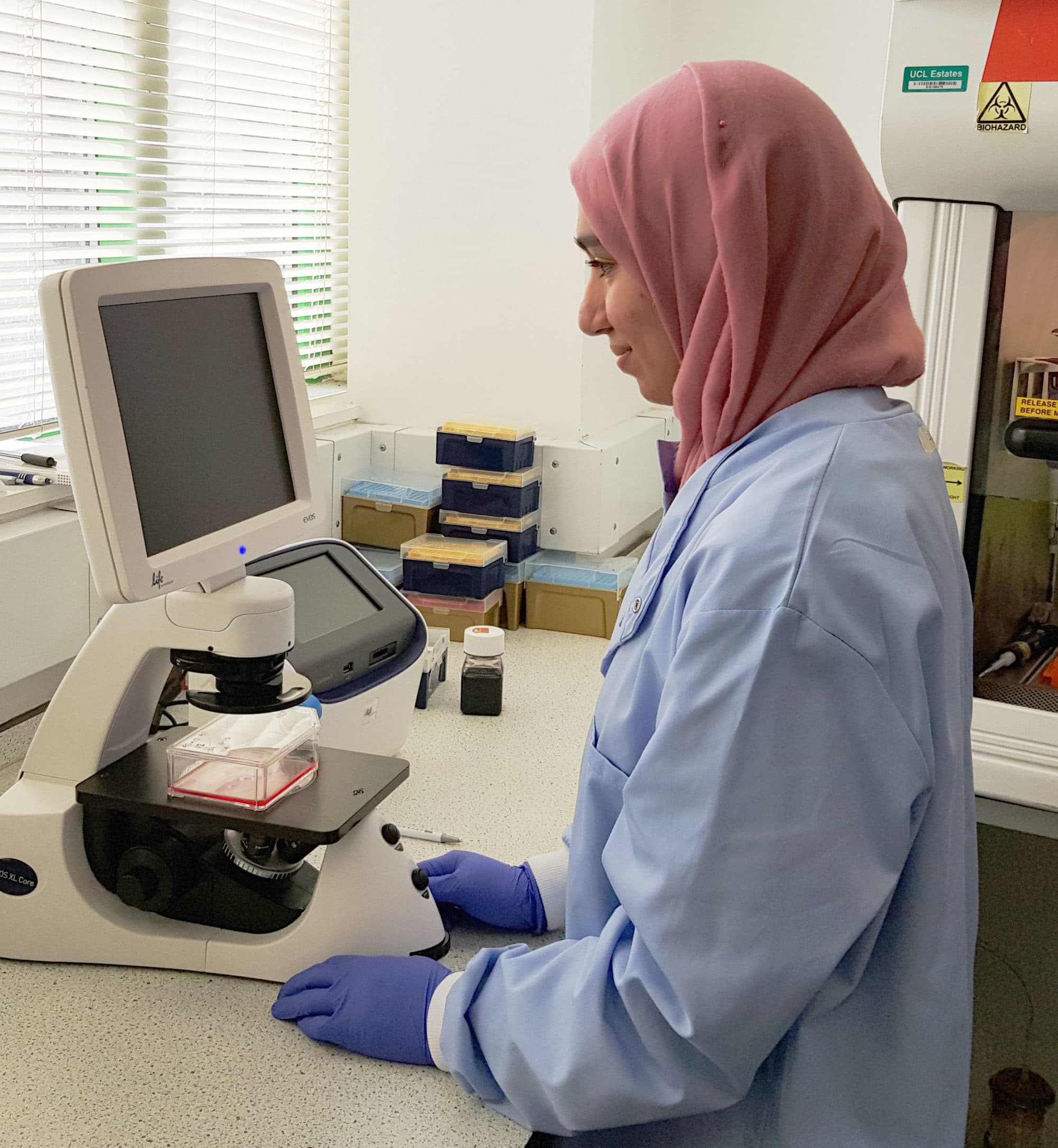
Hajrah Sarkar is a PhD student whose project is funded by Retina UK.
Bhavini was diagnosed with RP in 1997 aged 17. The consultant who confirmed her diagnosis told her that “there was no cure or treatment and she should prepare to go blind".