
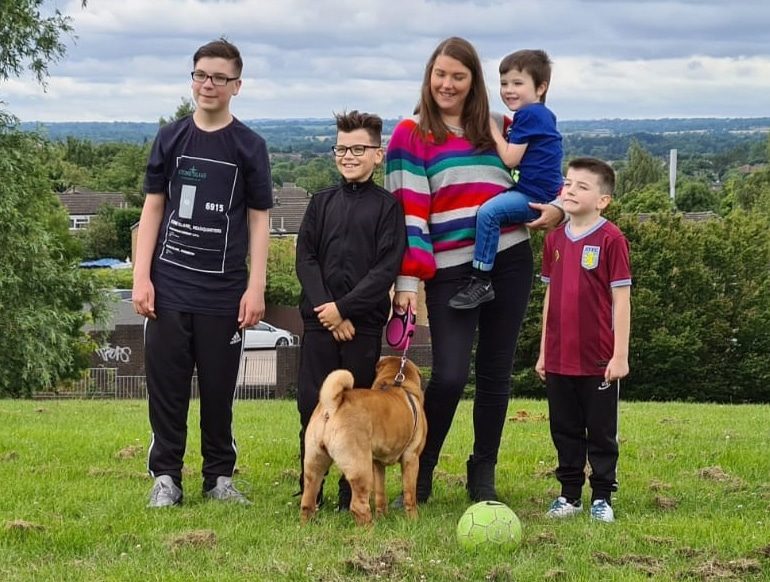
Meet our community: The Kearney family
Emily Kearney is mum to four boys, aged four to 13, two of whom are living with an inherited sight loss condition.
Search results
Emily Kearney is mum to four boys, aged four to 13, two of whom are living with an inherited sight loss condition.
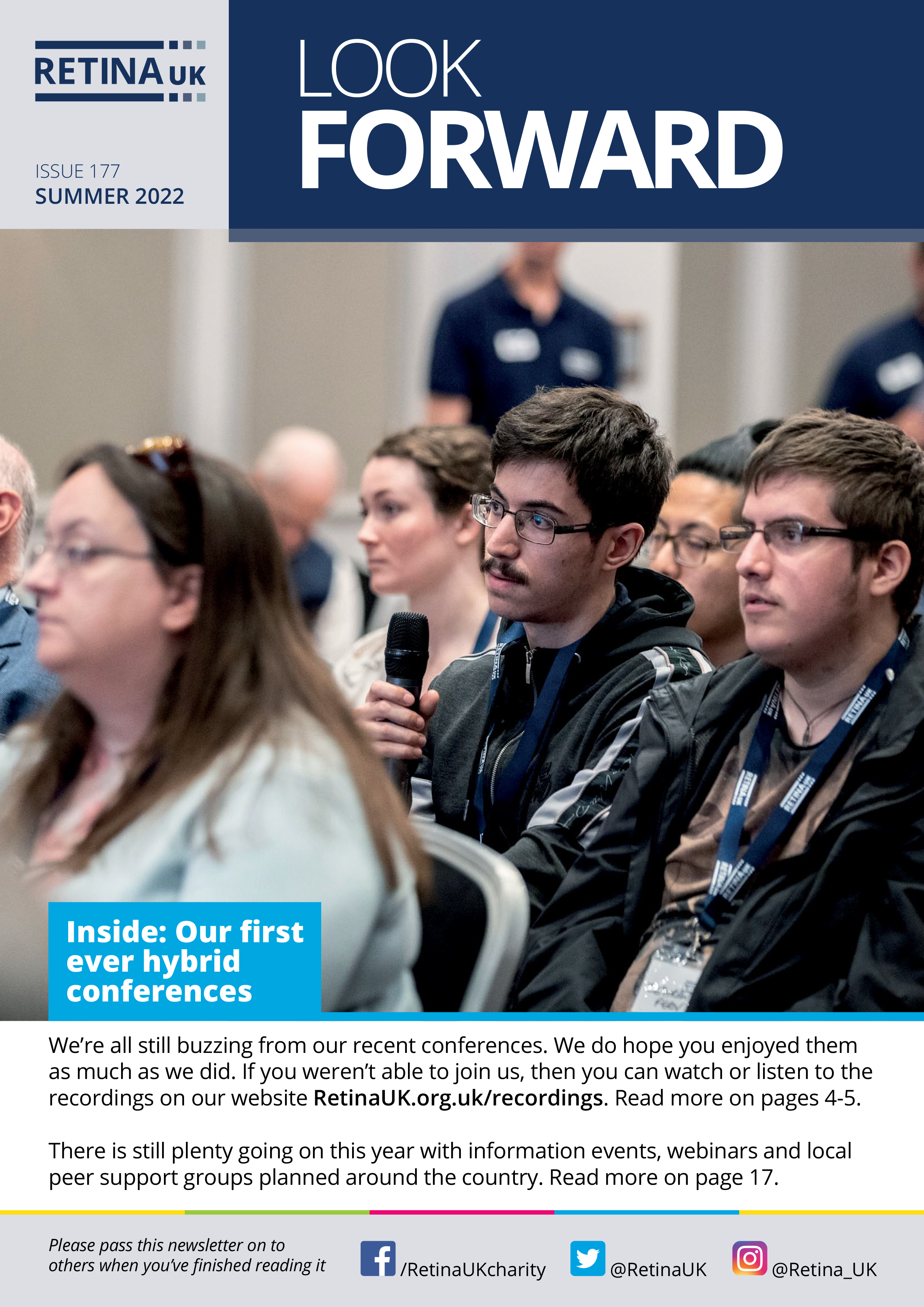
We’re all still buzzing from our recent conferences. We do hope you enjoyed them as much as we did. If you weren’t able to join us, then you can watch or listen to the recordings on our website.
These are some of the most commonly asked questions about genetic testing and counselling.
Next month, Anisha and Sheena will take on The Thames Path Challenge. Together, they explain why they decided to join #TeamRetinaUK.
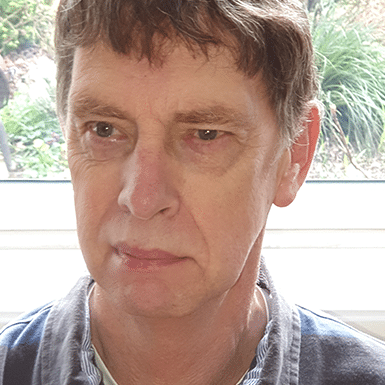
Martin started volunteering for Retina UK in 2014 after retiring as a Chartered Civil Engineer.
Biotechnology company Kiora Pharmaceuticals has been given the go-ahead to start in-human testing of a novel “small molecule” treatment, known as KIO-301, for advanced vision loss in retinitis pigmentosa (RP). The phase 1b clinical trial will take place in Adelaide, Australia, and will begin enrolling participants towards the end of 2022.
Retina UK is delighted to have awarded a new three-year research grant to Prof Majlinda Lako at Newcastle University for a project entitled: To establish AAV.PRPF31 gene augmentation in PRPF31-deficient RPE and photoreceptor cells and assess its efficacy in restoring RPE and photoreceptor function.
Early results from clinical testing of a gene therapy to treat X-linked retinitis pigmentosa (XLRP) have shown partial reversal of sight loss in some patients.

In this episode Laura and Mark talk about their dreams and how they see the world in sleep. Mark is living with retinitis pigmentosa so his sight has deteriorated over his life, whereas Laura lost her sight at a very young age. They also briefly cover Charles Bonnet Syndrome (CBS).
Our monthly e-Newsletter featuring the latest updates from Retina UK. Subscribe now to receive these updates directly to your email.